
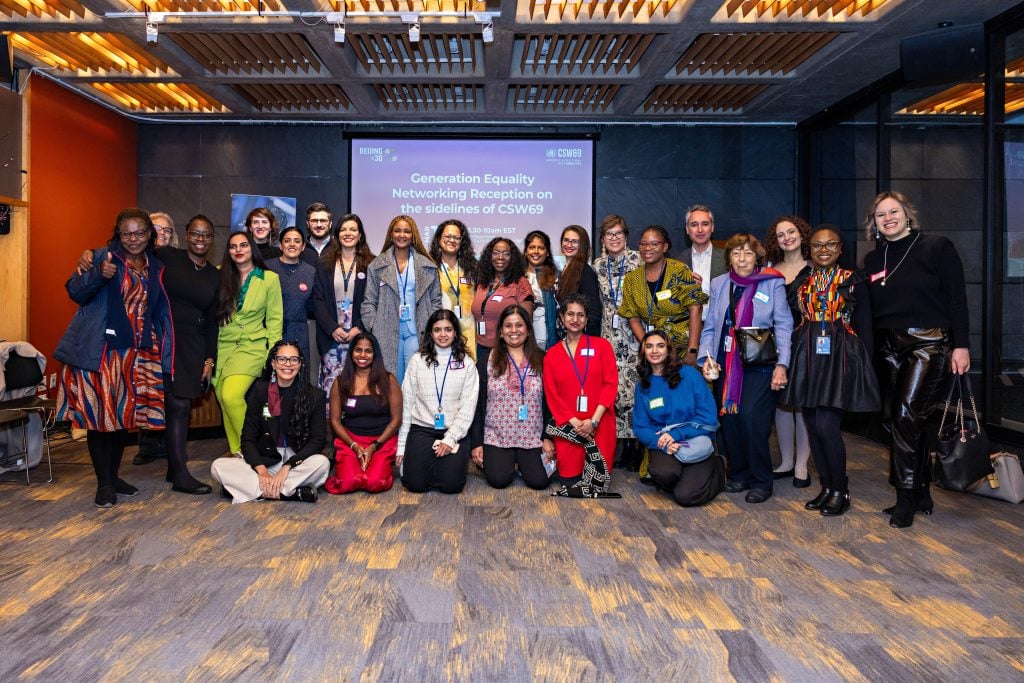
The 69th annual UN Commission on the Status of Women (CSW69), held from 10 to 21 March 2025 at the UN Headquarters in New York, marked a critical juncture in the global movement for gender equality. This year’s convening focused on the Beijing Declaration and Platform for Action, adopted thirty years ago, and assessed the progress made in advancing women’s rights. As the largest annual UN gathering on gender justice, CSW69 brought together governments, civil society organisations, activists, and experts to strategise and build collective action for gender equity.
Our founder Vandita Morarka represented One Future Collective at 69th Commission on the Status of Women, supported by Dasra and Heinrich Boell. Over the last year Vandita led and participated in multiple national processes towards the Beijing+30 review, was an instrumental part of the Beijing+30 Asia Pacific review, co-harvesting and drafting the young feminist statement, CSO statement and contributing towards the overall review. CSW69 was a culmination for these review processes and an opportunity to take our advocacy strategic priorities to global actors. Here, she engaged in critical dialogues on intersectional and intergenerational feminist leadership, shrinking civic spaces, and trust-based movement-building while fostering partnerships and community to carry on the committed actions from CSW69. At a time when hard-won rights face significant pushback worldwide, our presence at CSW69 was an opportunity to build solidarity, forge partnerships, and advocate for a more just and equitable world.
It was heartening for us to be at CSW as participants in a defining moment of feminist solidarity while also having the opportunity to co-host a side event, be seen as an expert in multiple fora as a speaker and be able to share our knowledge in closed door convenings. Below are some highlights from our engagements at CSW69!
Advancing Women’s Leadership: The WYDE Women’s Leadership Panel
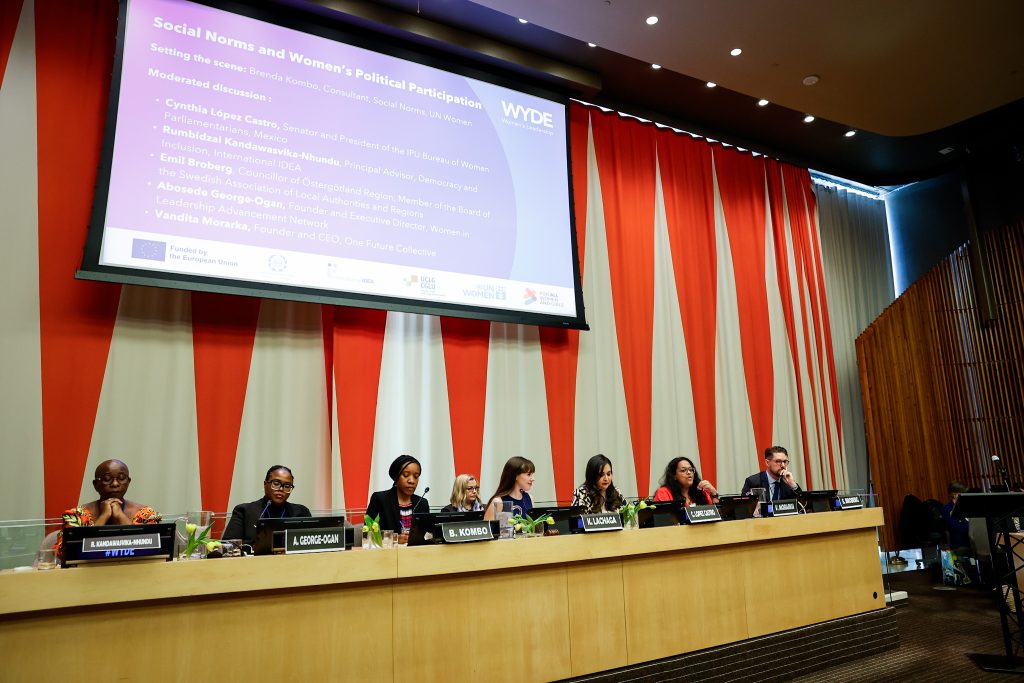
Vandita was a speaker at a critical side-event on ‘Transforming Norms: Advancing Women’s Leadership: Social Norms Change, Networking, and Global Advocacy to Advance Women’s Political Participation and Decision-Making,’ organised as part of the Women and Youth in Democracy Initiative (WYDE). This event, held on 10th March in the ECOSOC Chamber, gathered global experts to discuss the impact of shifting roles within political leadership and the strategies required to create enabling environments for women’s leadership.
For us, this conversation was deeply relevant because it resonates with the lived realities of the communities we work with in South Asia, where systemic barriers continue to limit women and queer individuals’ participation in governance and decision-making. Vandita joined the panel as a speaker and apart from other answers they focused on what is needed to continue to advocate in this climate. She examined the need for strategic shifts, finding unexpected allies and settling in for a long fight. Vandita also emphasised the need to build solidarity across organisations and invest in safety nets for the sector, through the example of the Urban Feminist Civil Society Network in India that One Future Collective convened last year; alongside an urgent need to recenter and enable everyday people to do this work while building relationships with those we disagree with. Her words were met with resonance in the room and amongst panellists.
Feminist leadership cannot be about representation alone; it must challenge and disrupt exclusionary power structures. Engaging with government stakeholders and policymakers from around the world reaffirmed our commitment to redefining leadership in ways that are collaborative, accountable, and rooted in justice.
Shaping Intergenerational Leadership: The World YWCA Panel & Breakfast Convening
Feminist leadership goes beyond who currently holds power; it is about how power is distributed, sustained, and transitioned across generations. In a panel hosted by World YWCA, Vandita presented insights on international and intergenerational feminist leadership. She shared how at eighteen one of her first independent impact projects was made possible by the trust, openness and generosity of the YWCA and YMCA Mumbai, India, teams. This showed her that intergenerational leadership in practice is about living your values especially when it is tough, making space for others even if it comes at a cost for you and approaching the difficult work that the development sector does from a mindset of collaboration, interdependence and abundance.
We were also invited to a closed breakfast by World YWCA where a key highlight was a sneak peak into the Intergenerational Leadership Tool, developed collaboratively by World YWCA and One Future Collective. This groundbreaking framework is designed to help organisations map, score, and advance shared leadership across generations. It was an honour for us to be able to share in the moment of the world getting a glimpse into an exciting new framework for leadership.
Defending Civic Space: A Panel on Strengthening Intersectional Feminist Movements
A defining moment of CSW69 for us was being able to co-organise an important side event, ‘Claiming Civic Space: Advancing Intergenerational and Intersectional Feminist Movements’ Held on 20th March, the event brought together feminist leaders, UN agencies, funders, local governments, and grassroots movements to hold the line and push our imagination on how we must continue to fight for civic freedoms and human rights.
Vandita was the moderator for the event alongside co-organising it, with the panel garnering insights from representatives from CIVICUS, Equality Now, IWDA, Working Group on Girls, and Fos Feminista.
As shrinking civic spaces and rising authoritarianism disproportionately impact feminist and grassroots movements, holding such a conversation became crucial. The event aligned feminist leadership priorities with global processes like Beijing+30 and explored practical strategies for sustaining feminist movements amid global challenges and local actions for change. The discussion provided a platform for member states to strengthen their support for feminist movements and align national policies with UN Women’s priorities. It focused on actionable solutions to protect civic spaces, ensure the safety of human rights defenders, and advance intergenerational and intersectional feminist leadership.
Building Trust as a Foundation for Bringing Change: The Bahá’í International Community Event
Trust-building within feminist movements is often undervalued, yet it remains a fundamental component of power-sharing, movement longevity, and effective advocacy. On 21st March 2025, in an event co-organised by Bahá’í International Community (BIC), UN Women, and the Young Feminist Caucus, we explored the role of trust in feminist organising. This event underscored the role of trust in advancing gender justice, particularly in global policy spaces where feminist movements must navigate power dynamics and institutional gatekeeping.
“Trust and trustworthiness are indispensable prerequisites for the long-term success of any collective endeavor. More and more frequently their importance is highlighted at the United Nations.” — BIC Representative Liliane Nkunzimana
In a landscape where feminist movements are fractured by funding constraints, ideological divides, and burnout, prioritising trust-building practices is essential for sustaining collective action. As a youth-led organisation, OFC remains committed to fostering accountability-driven, trust-based feminist networks that transcend transactional partnerships in the name of solidarity—both internally (through decentralised leadership and participatory decision-making), and externally (by building deep, collaborative relationships with our communities, our alumni, and our partners).
In addition to the key events we have highlighted above, Vandita joined several closed door meetings on girls rights, SRHR in the times of rising backlash, amongst others. We also organised an online conversation on youth leadership with our partners, YP Foundation and YLAC.
Looking Forward: From Conversations to Collective Action
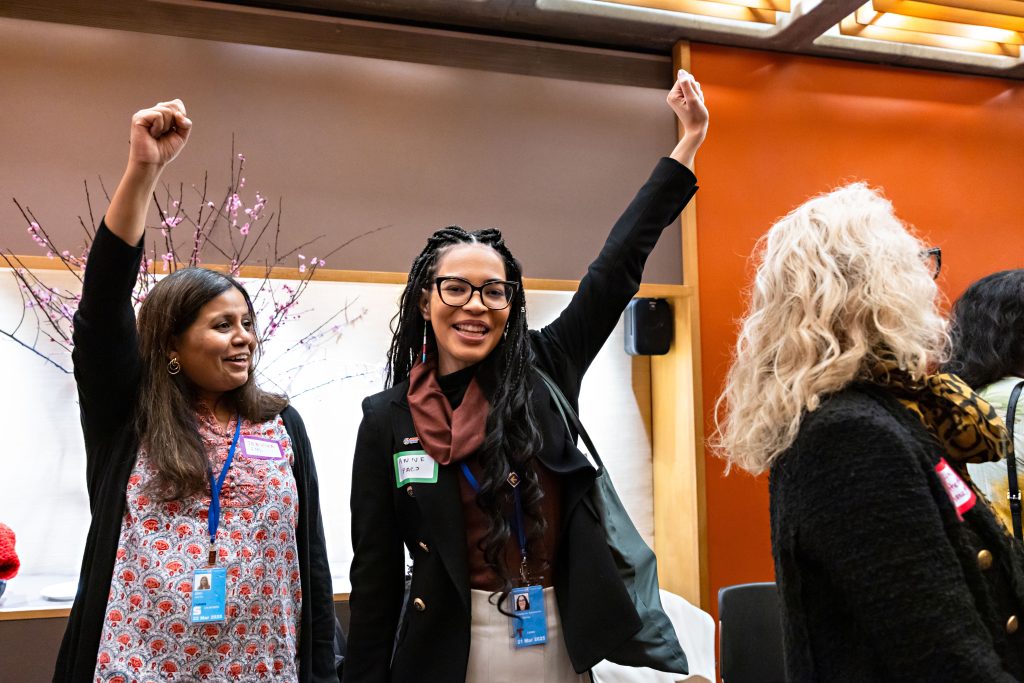
CSW69 was a powerful reminder that the fight for gender justice is far from over, but it is also an invitation to reimagine leadership, to reclaim civic space, and to build movements that are deeply intersectional, intergenerational, and collaborative. Our engagements reinforced the urgency of not just resisting rollbacks but actively building alternative structures of justice and equity. As we return, we do so with renewed commitment and strengthened alliances and many important lessons:
- Backlash and backsliding of gender justice remains one of the most important markers of forecasting a backlash against wider human rights and democratic values. Actors across the world need to listen and prioritise the fight against gender backlash.
- Forces we are fighting are funded to experiment and fail while we remain stuck in one year funding cycles. A true fight needs us to be better resourced: with money, skills and technology.
- We need to get over ourselves and find (sometimes even force) solidarity across differences within the feminist movement. You can call in and still remain committed to a larger fight, together.
- We need to resource multiple feminist generations with varied skills to advance this fight. While older activists may need better technological skills, younger feminists need to be trained in advocacy outside of social media.
- Convenings are important to build trust and friendships but they need to be more inclusive: from disability access to visa restrictions, we need to do better by the people we work alongside in ensuring not only their voice but they themselves are able to reach these convenings.
We extend our deepest gratitude to Dasra, Heinrich-Böll-Stiftung, Feminist Manch, and many others who made our participation possible. Our gratitude also extends to all those who contributed to these critical conversations, and to the partners and communities that continue to inspire and inform our work. Onwards in solidarity.